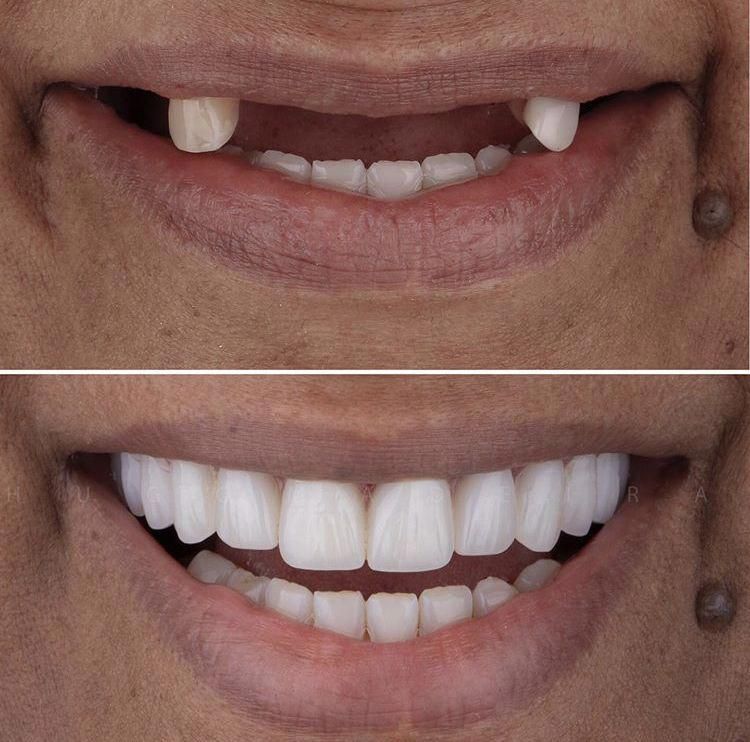
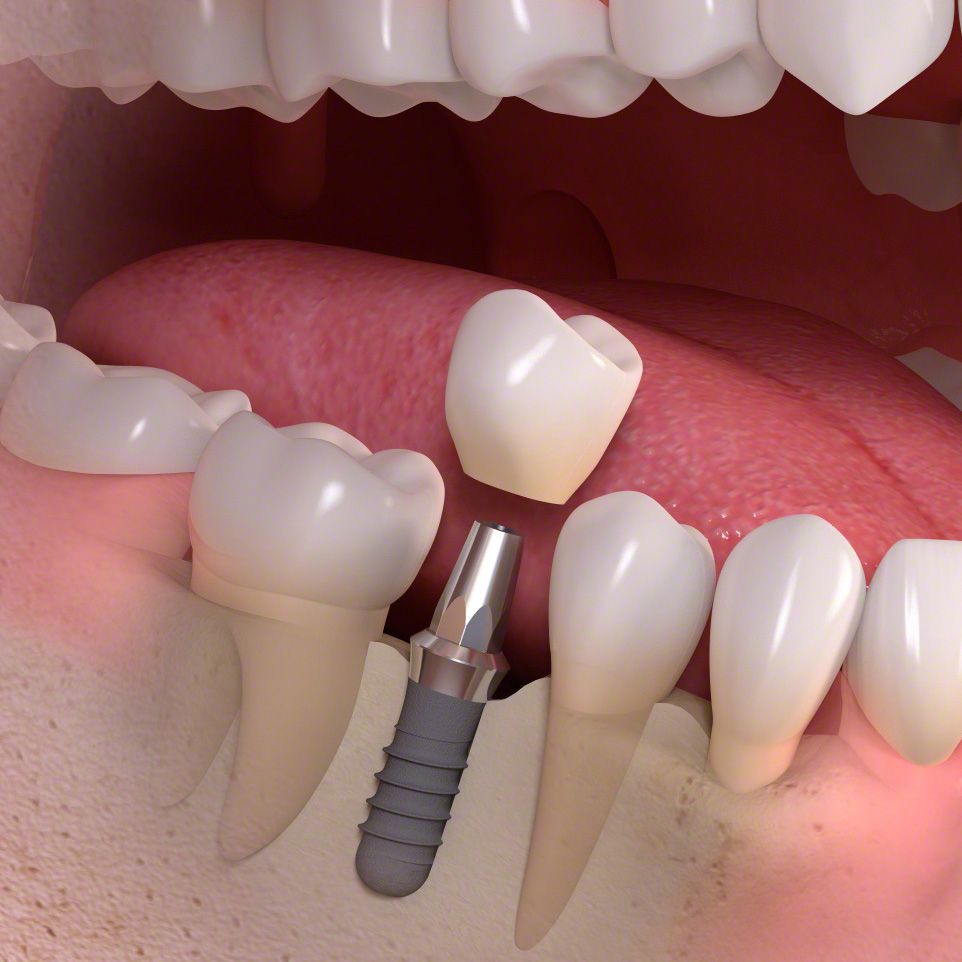
Dental implant treatment is a surgical procedure to replace missing teeth with artificial teeth that look and function much like natural ones. It involves placing metal, screw-like posts into the jawbone, which act as the roots for the replacement teeth
Replace missing teeth: Dental implants are a long-term solution for replacing one or more missing teeth.
Improved function: They restore the ability to chew properly, speak clearly, and bite naturally.
Enhanced aesthetics: Implants look and feel like natural teeth, improving your smile and confidence
Prevent bone loss: Missing teeth can lead to jawbone deterioration. Implants stimulate the bone, preventing this
Support adjacent teeth: Unlike bridges, implants don’t require altering adjacent healthy teeth.
Stability for dentures: Implants can provide a secure base for dentures, making them more comfortable and functional
The process typically involves several stages and can take several months:
Comprehensive Dental Exam: Your dentist will conduct a thorough evaluation, including X-rays and 3D imaging, to assess your jawbone and determine the best implant placement. Models of your teeth and jaw may also be made.
Treatment Planning: A personalized treatment plan is created, considering the number of teeth to be replaced, the condition of your jawbone, and your overall health
Tooth Extraction (if necessary): If the tooth to be replaced is still present and damaged, it will be removed
Jawbone Preparation (Bone Grafting if needed): If your jawbone isn’t thick or strong enough to support an implant, a bone graft may be necessary. This involves adding bone material to the area, which needs time to heal and integrate with your natural bone.
Dental Implant Placement: The oral surgeon makes an incision in your gum to expose the jawbone. Holes are drilled into the bone, and the titanium implant post is placed deep within it.
Healing (Osseointegration): This is a crucial phase where the jawbone grows around and fuses with the implant surface. This process, called osseointegration, can take 3 to 9 months.
Abutment Placement: Once the implant has integrated, a minor surgical procedure may be needed to attach an abutment – a small connector post – to the implant. The gum tissue is closed around the abutment but not over it. In some cases, the abutment may be placed during the initial implant surgery.
Artificial Tooth Placement (Crown, Bridge, or Denture): After the gums have healed around the abutment, your dentist will create a custom-made artificial tooth (crown for a single implant, bridge for multiple, or denture for all teeth). This restoration is then attached to the abutment, either permanently (cemented or screwed in) or removably (for implant-supported dentures).
Endosteal Implants: These are the most common type, placed directly into the jawbone. They come in various forms like screws, cylinders, or blades.
Subperiosteal Implants: These are placed on top of the jawbone but under the gum. They are used when there isn’t enough healthy jawbone for endosteal implants. A metal framework with posts protruding through the gums holds the artificial teeth.
Zygomatic Implants: A more complex type where the implant is anchored in the cheekbone (zygomatic bone). This is used when there is insufficient jawbone in the upper jaw.
All-on-4 Implants: A technique using four implants to support a full arch of replacement teeth.
Improved chewing ability and digestion.
Enhanced smile and confidence.
Improved speech and enunciation.
Preservation of the jawbone.
Long-lasting solution (can last a lifetime with proper care).
Stability for dentures. No need to alter adjacent healthy teeth (unlike bridges). Prevention of teeth shifting.
Reduced risk of cavities in the replaced area.
While dental implants have a high success rate, potential risks include:
Infection at the implant site.
Damage to surrounding structures (teeth, blood vessels, nerves).
Sinus problems (for upper jaw implants).
Nerve damage (can cause pain, numbness, or tingling).
Delayed healing.
Implant failure (failure to integrate with the bone or loosening).
Excessive bleeding.
Bone loss around the implant.
Breakage or fracture of the implant or abutment.
Overall health of the patient.
Health of the gums and jawbone.
Smoking (can hinder healing and increase failure risk).
Oral hygiene practices after surgery.
The experience and skill of the dental professional.
Follow your dentist’s instructions carefully regarding pain management, antibiotics, and oral hygiene.
Maintain excellent oral hygiene by brushing twice a day, flossing or using interdental brushes daily, and using a recommended mouthwash.
Schedule regular dental check-ups and cleanings.
Avoid smoking.
Report any swelling, pain, or loosening of the implant to your dentist immediately.